Monday, June 6, 2011

Top five most underrated films since 2000

UPDATE: I feel like 2001's Ghost World belongs on this list somewhere but I can't decide what to bump off. So let's just count Ghost World as an unofficial number six.

UPDATE OF AN UPDATE: I forgot about Wonder Boys from 2000, that should be on here too. This list is harder than I thought.

Each year, some films just get lost in the shuffle. Whether it's because it was overshadowed by bigger projects, misunderstood or, frankly, just not watched, some films never really get the credit they deserve. In order to limit myself, I decided to look at the past 10 years and decide which movies never had a chance. These are all masterpieces in their own right, yet somehow they were left behind. None of these films really won awards, some were not even nominated for any. Yet, as some films fade away and are forgotten, I hope these five movies have some sort of staying power. In that respect, maybe they'll finally get the respect they deserve. I tried to keep the list diverse in its selection. I also avoided movies with cult followings because, cult followings validate it a little. I want to find movies that are in more need of appreciation.

5. 25th Hour (2002)
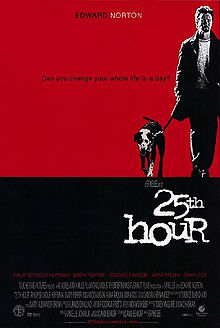

Set during a drug dealer's last day before being sent to prison, 25th Hour is a simple yet effective reflection on one man's life gone wrong and his relationships with those closest to him. Edward Norton gives a bombastic performance as Monty Brogan, the drug dealer on his way to Otisville. Although it is a personal and simple tale, Spike Lee milks every scene and gimmick for all it's worth. The result is both astounding and intense. Every actor in the film gives the performance of their lives, all culminating in a heartbreaking ending. And no scene could rival Norton's "Fuck You" monologue, a tirade of post-9/11 anger and Monty's own regret. As a Lee fan, I can honestly say that this could be his best film (behind Do the Right Thing of course).

4. Kingdom of Heaven (2005)


Have faith in Ridley Scott. The man who brought us Alien, Blade Runner, Black Hawk Down and Gladiator (a new classic if there ever was one), did it again with Kingdom of Heaven. A parable of modern Middle East relations, Kingdom of Heaven tells the story of a knight and his defense of Jerusalem during the crusades. Orlando Bloom gives a valiant effort as the main character, but supporting cast, such as Liam Neeson (amazingly badass), Jeremy Irons (awesome voice), Edward Norton (here he is again) and Brendan Gleeson (always enjoyable to watch), steal the show. Norton especially is memorizing as the dying leader of Jerusalem. Even through a mask he gives a powerful performance. The problem with this film was the studios. Looking for another success like Gladiator, the film was cut up and advertised poorly. Thankfully, the director's cut DVD restored the film to its amazing glory.

3. Road to Perdition (2002)


It's the ultimate father and son tale. Road to Perdition could be described as a depression-era retelling of Lone Wolf and Cub. Tom Hanks, at his most badass, goes across country robbing banks with his son and running from the mob that betrayed him and killed his family. Road to Perdition was the only film on this list to win an Oscar, for cinematography. And it deserves it, all thanks to Conrad Hall. The movie becomes a living Hopper painting. Cinematography, however, would be moot if there wasn't unbelievable actors to shoot. Hanks, Paul Newman, Jude Law (in his most un-Jude-Law performance), Daniel Craig and Stanley Tucci are brilliantly directed by Sam Mendes. However, the film was lost in the shuffle of a busy year. With Gangs of New York, Catch Me If You Can, The Pianist, The Hours, Adaptation. and the overrated Chicago all out the same year, it never really had a chance.

2. Unbreakable (2000)


Superhero movies, nowadays, are dime a dozen. The genre has already blown up, been reinvented and become a joke. Few of those superhero stories, however, are as methodological as Unbreakable. It's not just a story of a man learning he is a superhero, it's a story for every person in an existential crisis. It's about finding meaning in your own world. And it does all of this with a magnificent score by James Newton Howard (a score that I would say is the most underrated, if it wasn't for my next pick). The film both celebrates the comic book hero and deconstructs it in one fell swoop. Samuel L. Jackson also gives his most subdued performance as the purple-wearing mentor to Bruce Willis. The problem with Unbreakable was, it was M. Night Shyamalan's first film after The Sixth Sense. And, like most sophomore attempts, it was seen as disappointing. On the other hand, I see it as Shyamalan's masterpiece. Even more so than Sixth Sense. And, to me, it shows the quality that Shyamalan has lost in his most recent years.

1. Assassination of Jesse James by the Coward Robert Ford (2007)


With a run time that seems as unnecessarily long as its name, Assassination of Jesse James represents, to me, pure cinema. It's a story that is told perfectly by director Andrew Dominik. It's a film so gorgeous that you can pause it at anytime and be amazed at the cinematography (the train robbery scene is especially memorable). Though it clock in at almost three hours, the film tells an important story. It's about two men who find their own legends intertwining. The story deconstructs, not only westerns of the legend of Jesse James, but also the very idea of legends themselves. It does not judge who was right or wrong, but instead gives us a film to watch and marvel at. The film is a perfect mix of directing, cinematography, acting and music. Casey Affleck shows why he is a much better actor that his brother (his brother has grown into a fine director though). The whole cast gets a quiet moment for each character to shine. And Nick Cave and Warren Ellis, who made an amazing soundtrack to The Proposition, tops themselves with the beautiful yet subtle Jesse James soundtrack. The music and the movie is haunting. And after watching it, you wonder why it took two years for it to be released.

Thursday, June 2, 2011

Guest Blog: Today’s Music and Its Effect On My Generation

I asked for bloggers and now I have to own up to it. At least once a week I'll try and post a guest blog on top of my two. This week's blog comes from Darren, a buddy of mine that we affectionately call D-Bear. Any comments I make are in italics.
-Don Woods

I am not a music person. I don’t write songs or play an instrument. I couldn’t tell you anything about notes or pitch or anything technical like that, but what I do know about music is that the ear raping performed by today’s biggest artists is out of control. Is the noise on the radio today really called music?
Music- the tones or sounds employed, occurring in single line (melody) or multiple lines (harmony) and sounded or to besounded by one or more voices or instruments, or both.

Now I ask you, when was the last time you heard an instrument or autotune-free voice on the radio?

Or they don't need anything to be just plain horrible.

At this time, you’re probably expecting me to promote my personal favorite genre of music. And I would except for the fact that I like any music, anything other than the ear rape is fine with me. I'll take any genre with some type of instrument or vocalist who does more than talk. In order for this new style to be popular, there must be something special about it. So, if it’s not about talking in an annoying voice over computer-generated beats that makes these artists unique, maybe it’s the lyrics.

You know when you’re writing paper (or a blog...) and you just bullshit the whole thing by saying the same thing fifty different ways? Modern lyrics are kind of like that, but instead of “Leonardo da Vinci was a renaissance man” it’s “I like to have sex with attractive women and get free money for doing it.” If you think Lil Wayne is clever you would probably shit bricks after hearing Bo Burnham.

Haters call me gay, but that aint hatin
Cause I'm not homophobic, my morals are straight and
If I'm in the closet then you are below me
Takin the b-a-t out of basement, homey

I wish music could stop at music, but it doesn’t. Taste has a way of spilling into every aspect of our lives. These atrocities, being the most popular now, spawn a generation of stupidity unlike any other. Maybe I’m seeing connections that aren’t there but it seems like every terrible music video posted on Facebook is accompanied by an even worse message full of useless symbols and pointless acronyms.


&&##<3 smdh <3##&&

The dumbness continues into TV, where shows on MTV and Vh1 further dull down any signs of intelligence in our youth (To be fair, Vh1 has always been more of an older person's channel. It's the elephant graveyard where music goes to die). All around you are kids saying they have swag, which is apparently attained by giving up all knowledge of anything important in exchange for copious amounts of clothing (I love the word copious). I’m embarrassed to be in a generation with such an idiotic group of people.

I have hope that this is just a passing phase and that one day it will all just be a sickening memory, but I’m not holding my breath. For now I’m just going to go on listening to real music, speaking like an intelligent life form and watching the Discovery Channel.

Planet Earth all day.

If this actually gets posted, big thanks to D. Woods for providing me with an outlet to express my ideas.

-Darren Pascavage

Wednesday, June 1, 2011

Ferris Bueller's 25th anniversary, aka I heart Cameron Frye

Next week, June 11 to be exact, marks the 25th anniversary of Ferris Bueller's Day Off. While Matthew Broderick may not seem nearly as cool as he use to be, his character Ferris Bueller defined cool in the 80s. The movie's director, John Hughes, basically created pop culture in the 80s. His Brat Pack films helped define adolescence for a whole generation. While the majority of his movies were set in high school, there were no real discernible popular kids in his Illinois high schools. All of Hughes' children (that's the best way to describe all of his characters) were full of pathos. It's what drew teenagers to his movies. His characters were real people we could all identify with. Although his movies were fun, what made them endearing was how each generation related with the brain, athlete, basket case, princess or criminal. In that respect, Bueller himself was an outlier. Bueller is, arguably, the only carefree character in Hughes' whole repertoire. Ferris is none of those things. And it is because of this that Bueller is not entirely relatable.

Leisure does, in fact, rule.

Bueller's upper-middle class existence through life can hardly be called a struggle. The movie's whole thesis is the importance of just learning to relax and enjoy life. The tagline, the premise and every quote that finds its way to high school yearbooks, it all leads up to one important moral, "Life moves pretty fast. If you don't stop and look around once in a while, you could miss it."

Wise words from a wise man...

We can listen to Ferris, but honestly, we could never learn from him. He is already knee deep in his own philosophy. The man we see in the beginning of the movie and the end is the same smirking bastard throughout. He does not learn anything. He does not grow as a person. But then again that's not the point. Ferris is the rock that the whole movie relies on, but in the end the movie that bears his name is not really his movie. The secret to the movie is that, in actuality, it's Cameron's story.

Cameron is the third-wheel in the Gordie Howe jersey.

Cameron Frye is the true heart of the movie. The problem is that nobody really wants to watch a movie starring his neurotic self. But in the end, it's Cameron who grows as a person. The emotional and character arc is solely Cameron. Hell, the Ferrari goes through more of a development than most of the cast. Ferris is the cool friend we all want to be, but Cameron is the mess we all find ourselves as. And that is why Cameron is one of the characters in cinema that I hold dearest to my heart.

I even bought that t-shirt online.

Like Cameron, I too am so tight that if you stuck a lump of coal up my ass, in two weeks you'd have a diamond. He is the Ferris' philosophy at work. Cameron is the proof that a day of having fun in Chicago and a nervous breakdown can lead to enlightenment. The audience's heart goes out to Cameron throughout the whole movie as he learns to let go and be carefree. Only Alan Ruck's character can make staring at a Georges Seurat painting so vulnerable. Cameron may not get the very hot Sloane on his arm, but in the end he does develop as an individual. We never see what happens after his day off or the fallout from wrecking the Ferrari, but in the end we don't need to. Because that look on his face after it plunges out the window is all we need to know he'll be alright. And that is why I identify more with him than Ferris.


Although the person I resemble the most is drug-addled Charlie Sheen.

Recent watchers of the movie have even rebelled against the Ferris ideal. In today's cynical times, many have seen Ferris only as an entitled, spoiled, sociopath. Some people nowadays have taken Jeanie's point of view, yet did not learn from her subplot. This revisionist history found on blogs and IMDb message boards paints Ferris as nothing more than Charles Manson in a leopard-skin vest. Instead of wanting to be as carefree as everyone's favorite slacker, many have vilified him. People have even taken to seeing Ed Rooney, the hapless dean of students, as an anti-hero. While I do hoist Cameron as the hero of the film, Rooney is nothing more than a prick.


Jeffrey Jones would later be a convicted sex offender.

If Ferris Bueller was a real person he would now be 25 years older than we see him in the movie. Being 25 years older, who knows what he would be doing now or if his leisurely lifestyle continued into his middle-aged life. Maybe it's better we never know how his life works out. All we need is a snapshot of that one day in Chicago. For all of our sakes, we need to believe that we can stop and enjoy life. Because, while we all may want to be like Ferris, most of us are like Cameron. And like Cameron, hopefully we can all let go of our problems and learn to relax.

Cameron Frye, you're my hero.

Saturday, May 28, 2011

Further technical difficulties: Please stand-by

There comes a day (or perhaps a week), where one does not feel like doing anything. This is the land where motivation counts for nothing. So, just as last time, here are pictures of pandas to make up for my own laziness. Tune in for regularly scheduled programing next week. I don't know what I'm writing about next but it'll be neat-o. I promise.


Thursday, May 26, 2011

Guest Blog: Spielberg: Giving audiences what they want, but not what they need

I asked for bloggers and now I have to own up to it. At least once a week I'll try and post a guest blog on top of my two. This week's blog comes from Malcolm, a fellow movie buff who also has his own blog. Any comments I make are in italics.
-Don Woods

I hate Stephen Spielberg.

That’s not really a fair statement. Most of his films are harmless popcorn movies, such as E.T., Hook (I love Hook. To this day I don't believe that's really Dustin Hoffman) or the Indiana Jones franchise. But the Spielberg brand means much more than just the man these days; it has become synonymous with big Hollywood blockbusters. It's been like that ever since Jaws made almost half a billion dollars on a seven-million-dollar budget. The film itself wasn’t bad, it was almost Hitchcockian. But its success completely revolutionized Hollywood, for the worse I think. It set the standard for the Hollywood blockbuster. As a result big studios now depend on these types of movies. But, as I’ve said, these films are mostly harmless. It is when these films are mistaken for cinematic masterpieces that I take issue.

I doubt 1941 is one of those flicks.

Side note: Spielberg would return to Hitchcock-territory with 2002's Minority Report. Yes, the ending was a bit too Spielberg for my taste but the rest of the film is a gripping thriller, based off of Hitchcock's "wrong-man-on-the-run" genre of movies. One scene was even based off of a cut sequence from North by Northwest.

Exhibit A is Schindler’s List, the touching story of Oskar Schindler, a businessman who risked everything to save hundreds of Jews during the Holocaust. Spielberg adapted this story into film in 1993 and it went on to not only win Best Picture, but also to place in the top ten American films of all time in an AFI ranking.

Pictured: Wrong AFI

I hate Schindler's List. The first time I saw it, it rubbed me all the wrong ways. However, everyone else hailed it as a masterpiece. I was mortified that Spielberg had made what I considered a sentimental film about the Holocaust. Stanley Kubrick said it best when he began work on his own Holocaust movie. When Frederic Raphael, screenwriter of Eyes Wide Shut, asked Kubrick what he thought about Shindler’s List, Kubrick responded, “Think that was about the Holocaust? That was about success, wasn't it? The Holocaust is about six million people who get killed. 'Schindler's List' was about six hundred people who don't.”

Spielberg Oscars for directing: 2. Kubrick's: 0. It's a damn shame...


It reminds me of those films that came out a few years ago about September 11th that were so controversial. I remember September 11th quite well, and am glad it's over. Any film that does anything but depict the true horrors of that day will only lack perspective. These are human failures, and to view them as success stories in any way, to me, belittles history. This wasn’t the only thing that bothered me about the film. The portrayal of Amon Goeth, the Nazi who distrusts Oskar Shindler, is also shown out of perspective. Spielberg portrays him as a stone-cold killer with no human qualities, and at the end of the film there is a cathartic moment for the viewer as he is hanged. Fair enough, since this is how the historical Goeth died, but what about all the former Nazis that continued to live alongside the Jewish survivors following the war? Killing Goeth symbolizes the end of the Holocaust, and, to me, that shows only a rudimentary understanding of the Holocaust.

This is the man who took the guns out of E.T. He anesthetizes everything he touches.

As anyone who knows me, or reads my blog, or even read the first half of this entry knows, I bring almost every film discussion back to Stanley Kubrick. To me, he is the unrivaled master of filmmaking. Stanley Kubrick died in 1999, and I believe nobody could be angrier with that than Kubrick himself. Before he died however, he had already lined up his next film project – A.I. Artificial Intelligence. Kubrick spent almost thirty years thinking out this project, writing and rewriting screenplays, directing voice acting sessions, coming up with character and art directions and planning filming locations. In the early 90s, after seeing Jurassic Park, Kubrick decided that Spielberg should direct the film, with Kubrick collaborating closely as the films producer. Spielberg said yes at first, but later opted out, saying that Kubrick should direct it. Following Kubrick’s death, Spielberg was convinced to make the film, based on the extensive amount of work Kubrick put in to it. The film, which should have been a Stanley Kubrick production of a Steven Spielberg film, became completely Spielberg. Like Eyes Wide Shut, A.I. was going to push the limitations of the MPAA’s R rating, but Spielberg softened everything about it to ensure a more audience friendly PG-13 rating.


All the adult concepts are dropped, and the movie is given just about the happiest ending imaginable. The only Kubrickian part of the movie is the first act. It is a reworking of the biblical Cain and Abel (except in this case Cain is a robot). After the first act, it all goes to shit. Kubrick isn’t even personally mentioned in the credits, that’s how far from his vision Spielberg went. There’s no doubt that Spielberg’s version is more popular with audiences than Kubrick’s version would have been, that’s just how Hollywood works.

Haley Joel Osment was also kind of insufferable.

I agree that A.I. should of been 20 minutes shorter. Ending with him frozen under the ice praying to the Blue Fairy for all eternity has a nice poetic sound to it. It's about the futility of fate and the hopes of a little boy. What we get, however, is an epilogue so obviously tacked on that it is almost laughable.

I am quite certain many people will openly disagree with me on many parts of this article. What I am attempting to do is bring down a man who’s the biggest figure in the Hollywood system, and he has many devoted fans. I welcome your arguments, that’s when I feel I learn most about films, when I’m forced to argue about them. If you liked this entry, or hated it and want to let me know, check out my blog, Welcome to Pottersville, at dirtybrokebeautifulandfree.blogspot.com

Thanks Don for letting me have this spot this week, best of luck on future endeavors.

-Malcolm Coates